Last week, we published a four-part series on the U.S. public defender system. The series explored the job, its demands, and the problems facing the system.
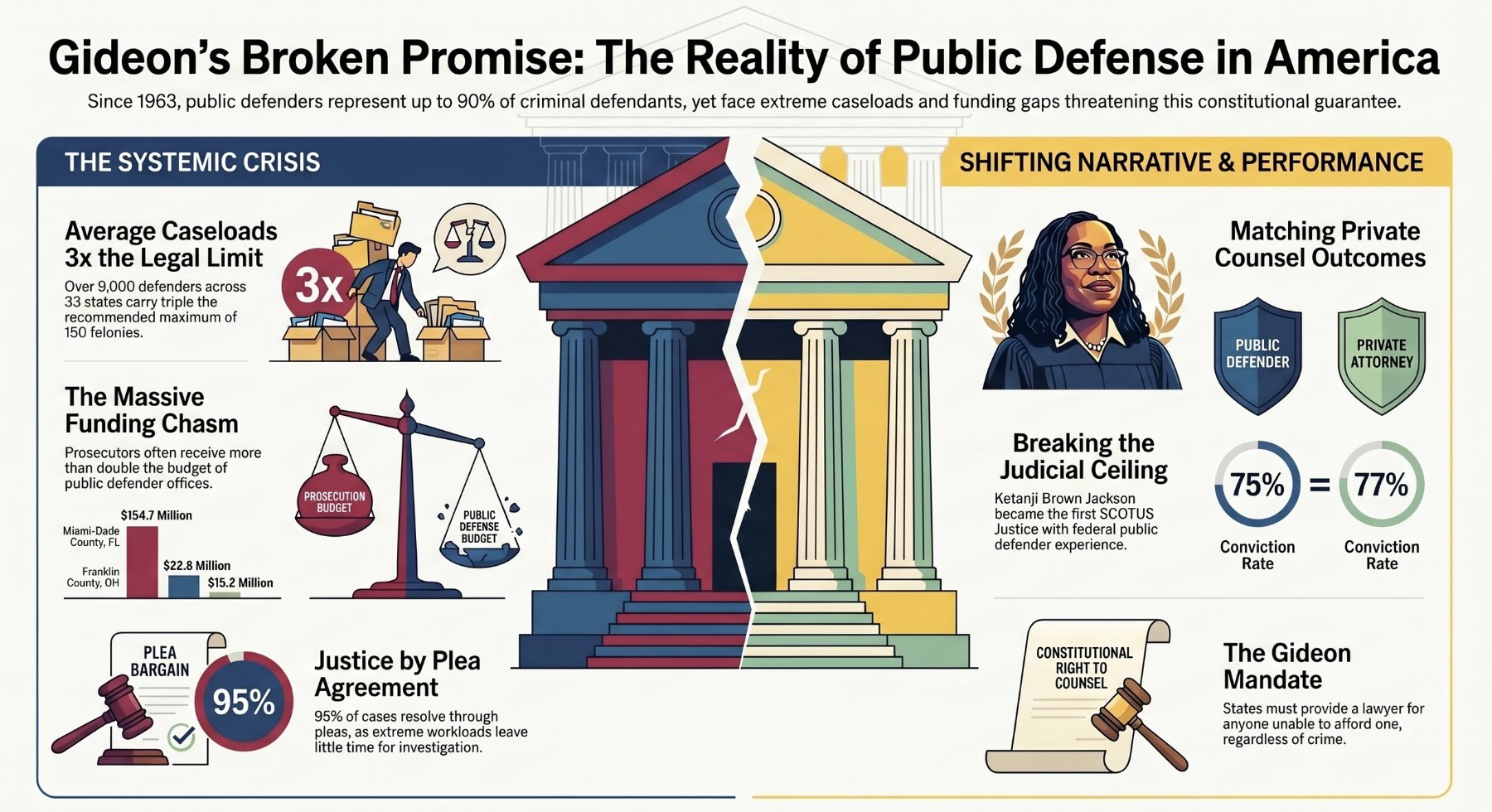
The 4-part series
Part 1: “You have the right to an attorney.” For most Americans, that means someone dangerously overworked.
Part 2: Ohio Supreme Court candidate Andrew King’s record defending violent criminals: a look at six of his cases
Part 3: The relentless grind: inside America’s overburdened public defender offices
Part 4: From the defense table to the national stage: how public defenders are rewriting the story of justice
When Clarence Earl Gideon sent a handwritten petition to the Supreme Court from his prison cell in 1962, he set in motion a ruling that fundamentally changed the American legal system.
The landmark 1963 decision in Gideon v. Wainwright established that the Sixth Amendment guarantees the right to counsel for all criminal defendants, regardless of their ability to pay.
Today, the phrase "you have the right to an attorney" is a cornerstone of American culture.
However, the modern reality of public defense often falls drastically short of this constitutional promise. Public defenders represent the vast majority of accused individuals but face crippling workloads, severe underfunding, and intense political scrutiny.
At the same time, a new generation of legal professionals with public defense backgrounds is rising to the highest levels of power, reshaping national conversations about justice.
This hub explores our comprehensive four-part series on the American public defender.
The broken promise of equal justice
To understand the current crisis, we must look at the systemic inequities built into the system. In “You have the right to an attorney.” For most Americans, that means someone dangerously overworked, we dive deep into the severe funding gaps between prosecutors and defenders.
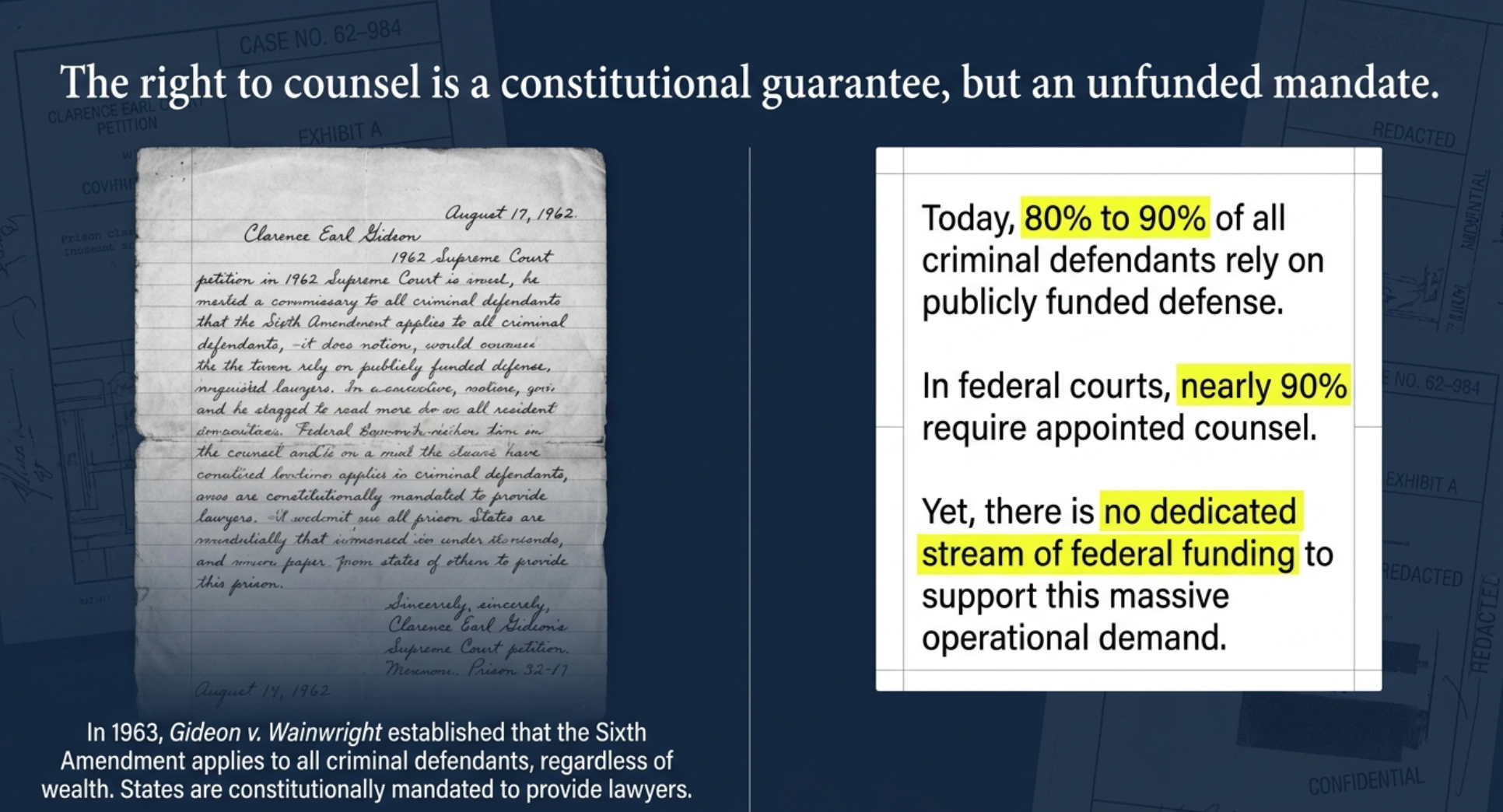
While 80 to 90 percent of all criminal defendants rely on publicly funded counsel, public defense remains an "unfunded federal mandate". A landmark study by the RAND Corporation and the American Bar Association revealed that public defenders routinely carry caseloads three times the recommended ethical limit of 150 felony cases per year, with some juggling more than 500 cases. This overworked system forces defendants to navigate the justice process with attorneys who simply do not have the time to fully investigate their cases.
Inside the daily grind
What do these crushing caseloads look like in practice? In The relentless grind: inside America's overburdened public defender offices, we take you to the front lines.
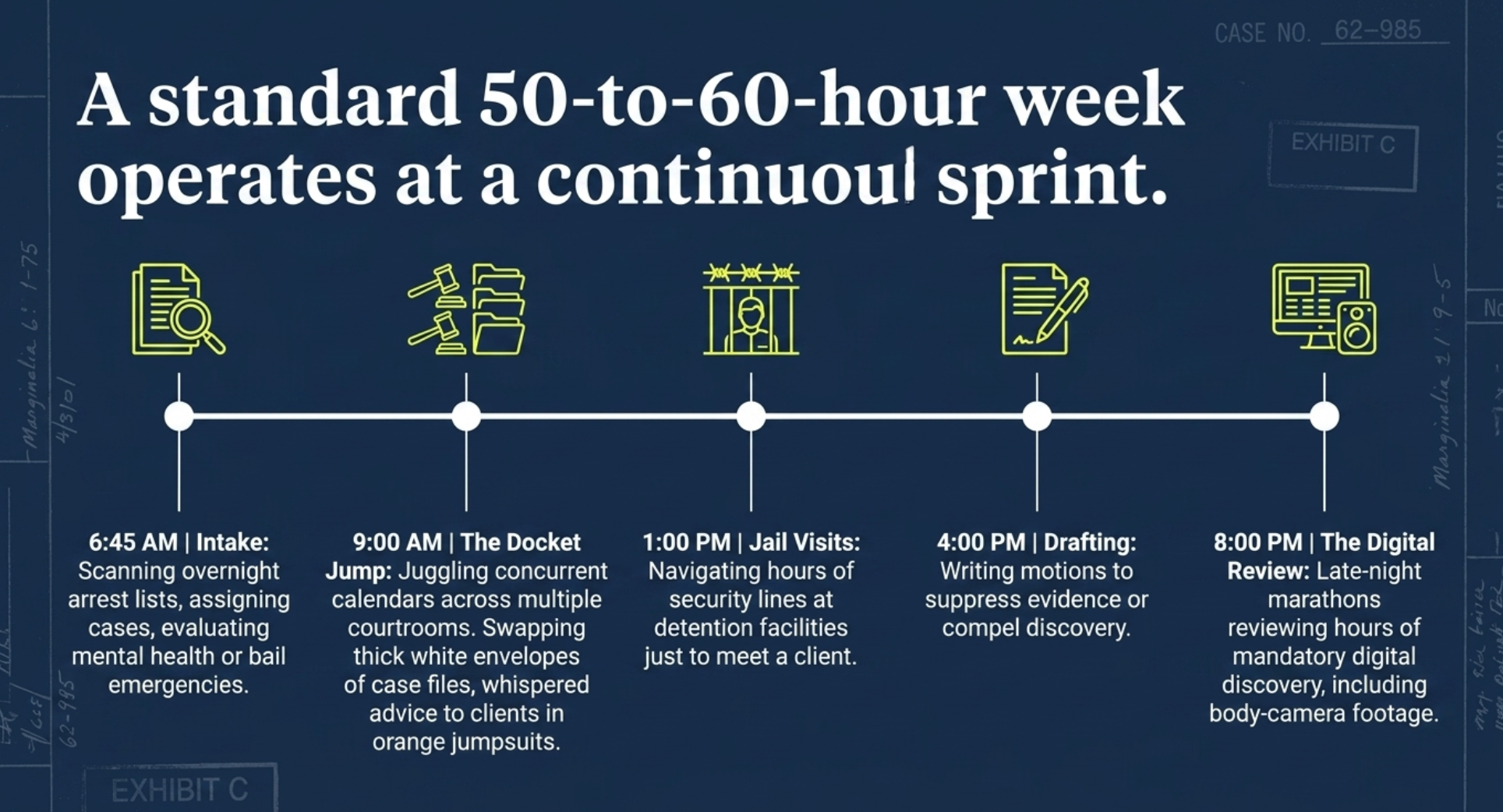
Public defenders operate in high-stress triage centers, often starting before dawn and working 50 to 60 hours a week. Because over 90 percent of cases are resolved through plea deals, the most consequential moments for defendants rarely happen in front of a judge; instead, they occur in hurried hallway negotiations and late-night discovery marathons. Despite chronic burnout and low pay, these attorneys and their support staff remain fiercely dedicated to the belief that everyone deserves a zealous advocate.
Rewriting the story of justice
Despite the grueling nature of the work, the perspective of the defense table is gaining unprecedented national influence. Our article, From the defense table to the national stage: how public defenders are rewriting the story of justice, highlights how former defenders are breaking out of the back of the courtroom.
Historically, America's legal heroes have been prosecutors or corporate lawyers. Today, figures like Supreme Court Justice Ketanji Brown Jackson, former San Francisco DA Chesa Boudin, and veteran capital defender Stephen Bright are shifting the narrative. Whether challenging government power from the Supreme Court bench or attempting to reform prosecution from within, these leaders show how a public defender's ground-level experience shapes a unique understanding of constitutional rights.
The political reality of defense records
While public defense is a constitutional necessity, an attorney's case history can become a political flashpoint. In Ohio Supreme Court candidate Andrew King's record defending violent criminals: a look at six of his cases, we examine the complexities of elevating defenders to judicial office.
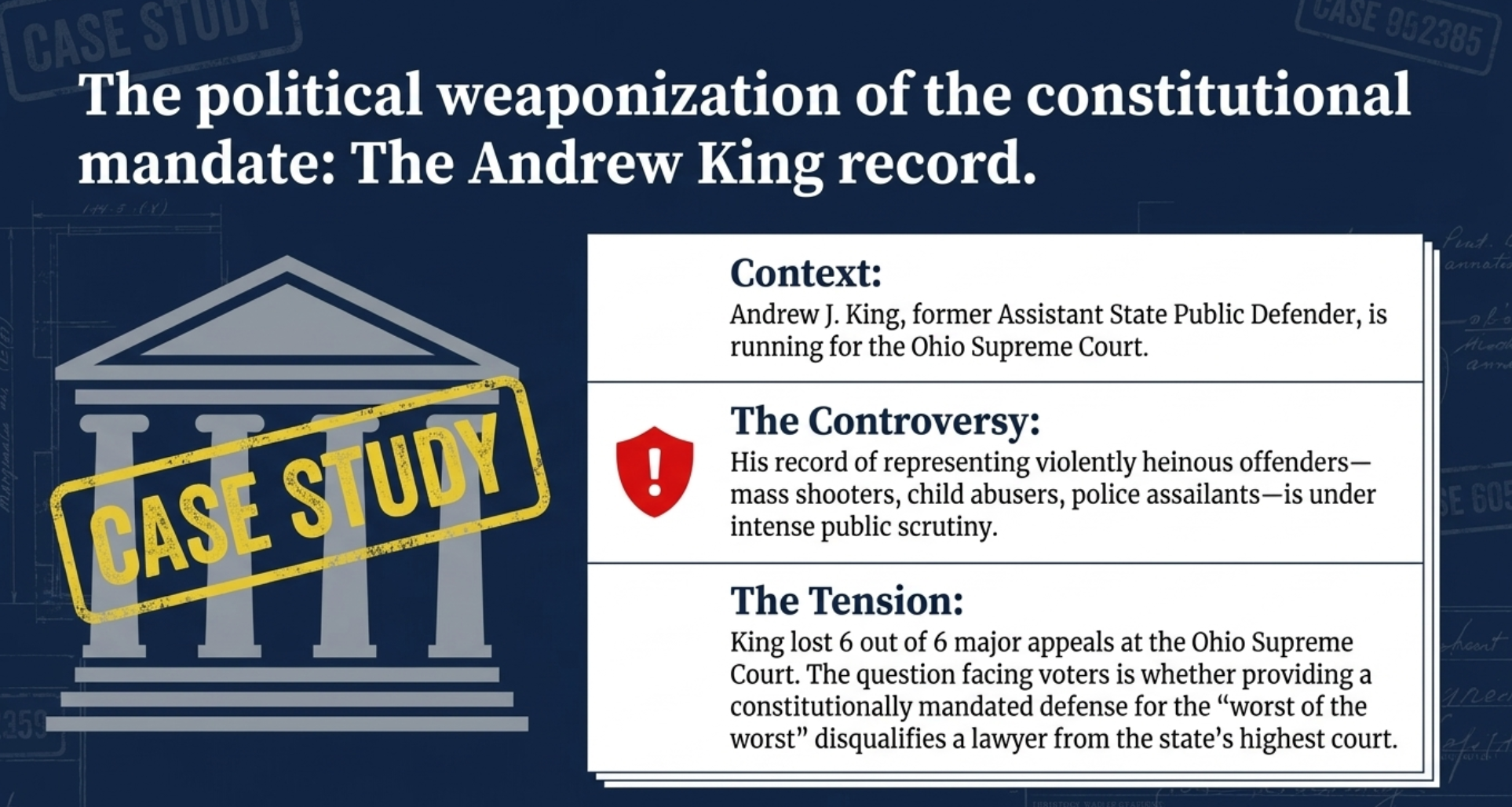
During his time as an Assistant State Public Defender, Judge Andrew King represented individuals convicted of shockingly heinous crimes, including mass shootings and violence against children. In all six cases reviewed, King's controversial legal arguments—ranging from accusations of police misconduct to claims of ineffective counsel—were wholly rejected by the Ohio Supreme Court. This record forces voters to ask difficult questions about whether the lawyers who defend the most violent offenders are the ones they want serving on the state's highest court.
The path forward
Taken together, these four stories reveal a system caught between its founding ideals and its operational reality. Gideon's promise was simple: no one should face the power of the state alone. Yet six decades later, that promise is sustained largely by the personal sacrifice of attorneys who are asked to do too much with too little — and judged, fairly or not, by the worst clients they were constitutionally obligated to defend.
The crisis is structural, not personal. No amount of dedication can offset a 500-case docket, and no plea deal negotiated in a courthouse hallway can substitute for a fully investigated defense. Fixing public defense will require what it has always required: sustained funding, enforceable caseload limits, and political will from lawmakers who recognize that a functioning defense bar is not a favor to the accused but a safeguard for everyone.
What is changing, however, is who gets to tell this story. As former defenders move into prosecutor's offices, judicial chambers, and the Supreme Court itself, the perspective from the defense table is finally entering rooms where policy is made. Whether that shift translates into the resources public defenders actually need — or remains a symbolic victory while the grind continues — is the question the next decade will answer.
For now, the work goes on. Before dawn, after dark, case after case, in the quiet rooms where most American justice is actually decided.