Public defenders represent nearly 9 in 10 criminal defendants, but a landmark study found most carry caseloads three times the legal limit. Advocates say the constitutional promise of equal justice is going unfulfilled.
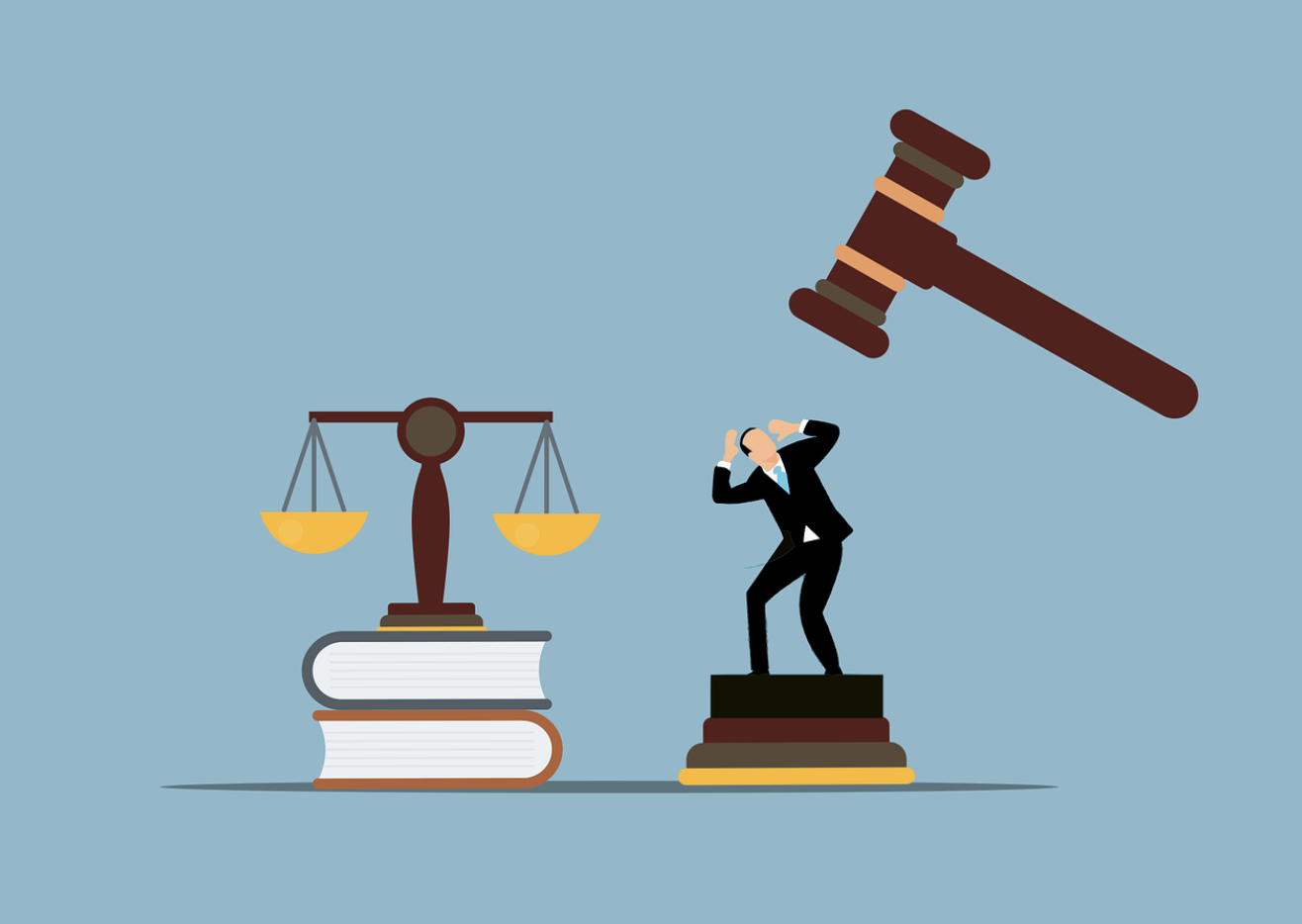
This article is first of a 4-part series this week on public defenders.
When Clarence Earl Gideon scratched out a handwritten petition to the United States Supreme Court from his Florida prison cell in 1962, he set in motion one of the most consequential legal decisions in American history.
Gideon, an indigent man convicted of breaking and entering, had been denied a court-appointed attorney at trial. Florida law at the time only guaranteed lawyers to defendants facing the death penalty. So Gideon represented himself, and lost.
The Supreme Court reversed his conviction in 1963, unanimously ruling in Gideon v. Wainwright that the Sixth Amendment's guarantee of the right to counsel applies to all criminal defendants in all states, regardless of whether they can pay. States must provide an attorney to anyone who cannot afford one.
More than six decades later, that promise ("you have the right to an attorney") is spoken at every arrest, recited in every police procedural, and stitched into the fabric of American legal culture. (And in popular TV culture too, we might add). But the lawyers who carry out that promise every day say the system built to fulfill it is cracking.
A system built on underfunding
Public defenders are fully licensed attorneys, holding the same law degrees and bar certifications as their counterparts in private practice or at the prosecutor's table. They are salaried government employees, hired competitively through a dedicated public defender's office, and their only job is to represent people who cannot afford a lawyer in criminal proceedings.
The need is enormous. Roughly 80 to 90 percent of all criminal defendants in the United States cannot afford to hire a private attorney, according to data from advocacy organization Being Atticus Finch. In the country's 75 largest counties, about 82 percent of people charged with violent crimes use publicly funded defense, according to the Bureau of Justice Statistics. In federal courts, nearly 90 percent of defendants rely on court-appointed counsel.
Yet public defense has long been what scholars call an "unfunded federal mandate". States are constitutionally required to provide lawyers, but there is no dedicated stream of federal funding to help them do so. The result is a patchwork of underfunded offices, overburdened attorneys and, critics say, a justice system that delivers meaningfully different outcomes depending on a defendant's bank account.
"Public defenders are guardians of our constitutional rights," the American Civil Liberties Union said in a statement marking the 60th anniversary of Gideon. "When public defenders zealously defend their clients, they are holding us all to our stated beliefs that these rights are for everyone — not just the innocent, not just the wealthy or the socially favored."
“Dangerously overworked”
In September 2023, a coalition of researchers from the RAND Corporation, the National Center for State Courts and the American Bar Association released what advocates called the most comprehensive study of public defender workloads ever conducted.
The findings were stark.
More than 9,000 public defenders across 33 states were carrying average caseloads three times the recommended maximum, the study found. In five additional states, the 50 highest-caseload defenders averaged four times the limit. In Texas, the most overburdened attorneys handled six times the appropriate number of cases, with two attorneys managing 12 times the ethical limit.
The ABA's recommended maximum is 150 felony cases per year for a single attorney. In some jurisdictions, defenders handle more than 500.
"Overloaded attorneys simply cannot give appropriate time and attention to each client," the study concluded. "They cannot investigate fully or in a timely manner. They cannot file the motions they should. Cases are delayed, and evidence and witnesses are lost."
The funding gap between prosecution and defense is visible in budget documents across the country. In Miami-Dade County, Fla., the State Attorney's Office (the prosecution) had a fiscal year 2023 budget of $154.7 million. The Public Defender's Office had $64.7 million.
In Franklin County, Ohio, the prosecutor received $22.8 million to the public defender's $15.2 million.
On the front lines: a day in the life
For the attorneys who do this work, overwork is not an abstraction. It is a Tuesday.
A typical day for a public defender at a busy office might begin with a stack of messages, then a sprint to the courthouse to cycle through a series of hearings — sometimes in two or three courtrooms simultaneously, loosely scheduled. The attorney moves between judges, alerting court staff of their location until cases are called.
In the afternoon, there are motions to draft: motions to suppress evidence seized in a potentially unlawful search, motions compelling prosecutors to hand over discovery materials, motions to sever co-defendants with conflicting interests. In the evening, there is trial preparation (cross-examination outlines, opening statements, witness lists) for a case starting Thursday.
On some days, the attorney drives to a detention facility to meet a client, a process that can consume several hours in security lines before a single word is spoken about the case.
Most public defenders report working 50 to 60 hours a week. During an active trial, the hours climb considerably higher.
The emotional weight compounds the physical demands. Clients are often the most vulnerable people in the system: poor, sometimes mentally ill, frequently facing the most consequential moments of their lives. For many defendants, the public defender is the only professional in the entire judicial process who is, by law, entirely on their side.
The art of the invisible deal
Perhaps the most misunderstood aspect of public defense is where most of the actual work happens: not in the dramatic courtroom moments depicted on television, but in private negotiations with prosecutors that never make it before a judge.
Approximately 95 percent of criminal cases in the United States are resolved through plea agreements, not trials. For the vast majority of defendants, the most consequential legal moment of their lives takes place in a hallway conversation or a conference room, not a courtroom.
"Public defenders see the charges that prosecutors threaten and then withdraw, the factors that shape prosecutors' decisions about when they drop charges and when they move forward," Georgetown University law professor Paul Butler told The Appeal in a 2018 interview. "That institutional knowledge can't be replicated by an outside observer."
When a public defender is too overworked to adequately investigate the facts of a case before a plea negotiation, advocates say, the result can be defendants accepting harsher deals than their cases warrant.
Who's in charge and how they got there
Public defender offices are led by a chief public defender (sometimes called a lead defender or director) who manages office administration, sets policy and oversees the office's budget and attorneys.
Unlike district attorneys and state's attorneys, who are elected in most U.S. jurisdictions, chief public defenders are most commonly appointed, either by a statewide public defense board, by a governor, or by a panel of judges. Florida is among the exceptions: its public defenders are directly elected by voters, one per judicial circuit, placing them on the same democratic footing as the prosecutors they face in court.
The asymmetry between elected prosecutors and appointed (or otherwise less visible) public defenders has drawn scrutiny from legal scholars. Prosecutors must answer to voters. Public defenders, in most states, do not.
Better than their reputation
A persistent myth holds that a public defender, because they are free, must be inferior to a paid private attorney.
The data do not bear this out.
Bureau of Justice Statistics figures show that conviction rates for defendants represented by public defenders and those represented by private attorneys are nearly identical: 75 percent versus 77 percent.
A study by the California Policy Lab in San Francisco found that defendants represented by public defenders were 6 percent less likely to be convicted than those represented by court-appointed private attorneys, and 22 percent less likely to be incarcerated.
Federal sentencing data suggest federal public defenders achieve sentences roughly 4.6 percent shorter on average than those obtained by private or panel attorneys.
Public defenders, researchers note, often develop deep familiarity with local prosecutors, judges and court culture. This is institutional knowledge that a private attorney hired for a single case may lack entirely.
The promise, still deferred
In the 63 years since Gideon, the scope of the right to counsel has expanded. It now covers juvenile proceedings, misdemeanor cases where jail time is possible, probation revocation hearings and plea bargaining. As recently as March 2024, all 50 states had, for the first time, begun contributing at least some level of funding to indigent defense, a milestone that itself speaks to how long the system has operated with inadequate resources.
But the gap between the constitutional promise and its practical reality remains vast. New Hampshire's public defender office, for example, pays starting salaries of $65,000, which is less than every county attorney's office in the state, and among the lowest in New England.
Turnover is severe: Florida's public defender offices saw a statewide turnover rate of 26 percent, with some circuits exceeding 50 percent. One Virginia office lost 60 percent of its attorneys over three years.
The Vera Institute of Justice, a criminal justice research organization, put the stakes plainly in a February 2026 report on public defense funding.
"You have the right to an attorney," the Vera Institute wrote. "It's a familiar line from countless TV procedurals. But without adequate funding for public defenders, that promise falls short."
Gideon won his case when the Supreme Court sent it back for retrial . . . this time, with a lawyer. He was acquitted.
Sixty-three years later, millions of Americans walk into courtrooms every year hoping the person assigned to stand beside them had enough time to read the file.
Further reading
Careers in Indigent Defense: A Guide to Public Defender Programs (Harvard Law School)
Gideon v. Wainwright (1963) (Khan Academy)
National Public Defense Workloads Standards (American Bar Association)
Public Defender Job Description – What You Need to Know (NARO Law)
“The Public’s Defender: Analyzing the Impact of Electing Public Defenders” (Columbia Human Rights Law Review)
This article draws on reporting from the Bureau of Justice Statistics, the American Bar Association, the Vera Institute of Justice, the ACLU, the RAND Corporation, the National Center for State Courts and the U.S. Supreme Court's opinion in Gideon v. Wainwright (1963).