Ketanji Brown Jackson, Chesa Boudin and Stephen Bright are rewriting what legal heroism looks like — and forcing a reckoning with Gideon's broken promise.
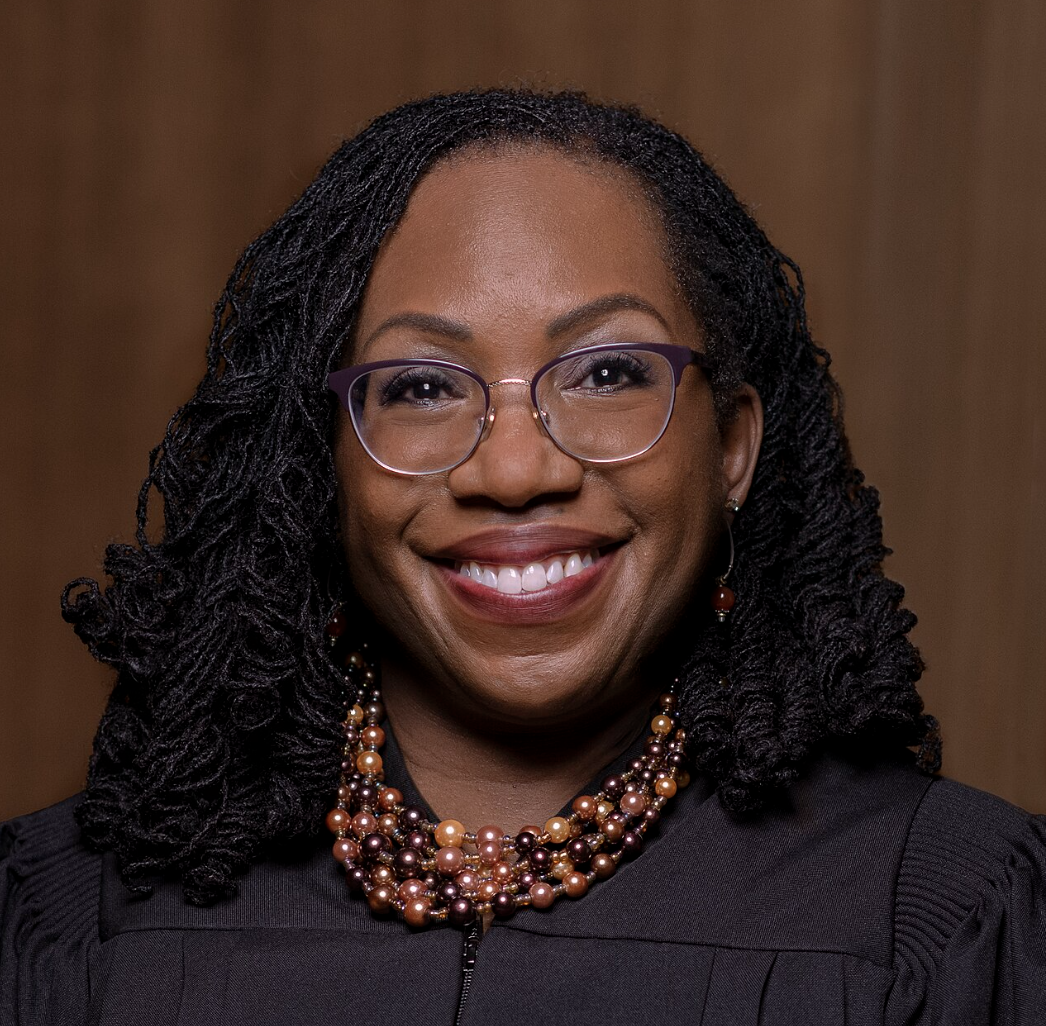
Supreme Court Justice Ketanji Brown Jackson
This article is the fourth of a 4-part series this week on public defenders.
For generations, America’s legal heroes have tended to be prosecutors, federal judges and high‑powered corporate lawyers. Public defenders, who represent poor people accused of crimes, rarely make front‑page news.
That is starting to change.
A small but influential group of lawyers with public defender roots (including Supreme Court Justice Ketanji Brown Jackson, former San Francisco district attorney Chesa Boudin and veteran capital defender Stephen Bright) has pushed the once‑overlooked role into the national spotlight. Their careers, and the controversies that surround them, are forcing a broader debate about what justice really looks like in American courts.
A public defender on the Supreme Court
When Ketanji Brown Jackson was nominated to the Supreme Court in 2022, news coverage focused on a credential no other justice had ever brought to the bench: she had worked as a federal public defender.
From 2005 to 2007, Jackson served as an assistant federal public defender in Washington, representing indigent defendants in federal criminal cases, including appeals and post‑conviction matters. She was part of a small minority; reporting at the time noted that very few federal judges (and no Supreme Court justice before her) had experience as a public defender.
Much of the attention centered on her representation of Guantánamo Bay detainees. As a public defender and later in private practice, Jackson helped challenge the detention of men held as terrorism suspects, including client Khi Ali Ghul. Critics in the Senate questioned those cases during her confirmation, while supporters framed them as proof of a core constitutional principle: that everyone, however unpopular, is entitled to a defense.
Commentators highlighted her repeated emphasis on public service and ground‑level experience. Jackson has written and said that her work in trial‑level criminal courts shaped her understanding of what constitutional rights mean in practice, making her an unusual presence among justices whose careers were largely appellate and academic.
Her elevation symbolized a broader shift: a growing recognition that the perspective of the defense table (not just the prosecutor’s lectern) belongs at the center of national conversations about crime and punishment.
A public defender runs the prosecutor’s office
If Jackson brought public defense experience to the nation’s highest court, Chesa Boudin brought it somewhere just as improbable: the San Francisco district attorney’s office.
Before his election as DA in 2019, Boudin worked as a deputy public defender in San Francisco, handling felony cases and appeals for people who could not afford lawyers. His caseload included serious charges such as robbery and gun offenses, and he became known for aggressive litigation over police conduct, search and seizure and pretrial detention.
Boudin’s personal story (the child of Weather Underground members Kathy Boudin and David Gilbert, both incarcerated for his entire childhood) became a recurring feature of news profiles explaining his skepticism toward mass incarceration. On the campaign trail, he cast his candidacy as a continuation of his work at the defense table, promising to end cash bail, shrink the jail population and expand diversion programs.
When he won, national outlets framed the result as part of a “progressive prosecutor” wave, but also as a test of what happens when a career public defender is suddenly in charge of charging decisions.
The test soon became a flash point.
Coverage of Boudin’s tenure focused on his reluctance to file certain drug and low‑level property cases, his handling of police shootings and a spate of high‑profile crimes that critics linked to his reforms. Videos of brazen retail theft and debates over homelessness and drug use fueled a recall campaign that drew national attention.
Boudin responded in language familiar from his public defender days. He argued that “we cannot prosecute our way out of poverty,” and that his time representing indigent defendants had shown him “how the system fails the most vulnerable.” He pushed resentencing, diversion and alternatives to incarceration, even as opponents accused him of making the city less safe.
Voters recalled him in 2022, an outcome widely described as a referendum on progressive prosecution and, implicitly, on whether a public defender’s worldview fits the role of a big‑city district attorney. In post‑recall coverage and later academic roles, Boudin’s identity as a former public defender has remained central to how both supporters and critics understand his politics.
The lifelong defender of the poor
Long before public defenders were making headlines by ascending to the Supreme Court or running district attorney’s offices, Stephen Bright was fighting quieter battles in Southern courtrooms.
Bright, a longtime director and attorney at the Southern Center for Human Rights, is one of the country’s most prominent career capital defenders. Over decades, he has represented people facing the death penalty in Georgia, Alabama and other Southern states, often in cases marked by extreme poverty, inadequate prior counsel and racial discrimination in jury selection.
His work has repeatedly intersected with the legacy of Gideon v. Wainwright, the 1963 Supreme Court case requiring states to appoint lawyers for indigent felony defendants. In interviews and essays, Bright has argued that Gideon’s promise remains unfulfilled, pointing to chronic underfunding, crushing caseloads and political pressure on public defenders.
“Public defenders are the measure of the gap between our rhetoric and our actions,” he has said in various public remarks, using the right to counsel as a way to gauge whether the system treats rich and poor alike.
News articles and judiciary reports marking the 60th anniversary of Gideon in 2023 often turned to Bright as a key voice. They highlighted stories of defenders juggling hundreds of felony cases, with Bright and others calling for enforceable workload limits and structural changes so that lawyers for the poor can provide something closer to the representation wealthier defendants receive.
Bright has also influenced the next generation of lawyers through teaching posts at elite law schools, urging students to view public defense not as a fallback job but as frontline civil rights work. While he has never held elected office or a seat on a high court, national outlets frequently quote him in coverage of capital punishment, indigent defense and criminal justice reform.
The unfinished work of Gideon
The story that links Jackson, Boudin and Bright runs through an older name: Clarence Earl Gideon, the Florida drifter whose handwritten Supreme Court petition led to Gideon v. Wainwright and the modern right to counsel. (We profiled the Gideon case in our Monday article this week).
Sixty years after that decision, public defenders still carry caseloads that would be unthinkable in most private practices. In a widely cited New York Times report, one lawyer was documented handling 194 felony cases at once, a number experts said made thorough representation nearly impossible. Courts and commentators have warned that such overload undermines the constitutional guarantee Gideon was supposed to secure.
Yet even as the system strains, the careers of Jackson, Boudin and Bright show how the public defender’s perspective is moving closer to the center of national debate. A former federal defender now questions government power from the Supreme Court bench. A onetime San Francisco trial lawyer tried to remold prosecution itself using lessons from the defense table. A veteran capital defender continues to press the case that the right to a lawyer, without adequate funding and time, is a promise in name only.
For a profession long confined to overcrowded arraignment courts and overlooked hallway plea negotiations, their rise suggests that the public defender’s story — and the constitutional values it embodies — may finally be breaking out of the back of the courtroom.
Further reading
“One Lawyer, 194 Felony Cases, and No Time” (New York Times)
Public Defenders: Last Week Tonight with John Oliver (HBO) - via YouTube (humor)
“Reviving the Hero Image of the Public Defender by Changing the Story of Our Clients” (National Association for Public Defense)
The 8 Most Famous Defense Attorneys of All Time (Lawmatics)
“There's a reason Ketanji Brown Jackson is the 1st public defender appointed to SCOTUS” (The Week)
“You have the right to a lawyer, but public defenders note a lack of resources, respect” (NPR)