Prosecutors on the front lines: justice, caseloads and the hidden toll of the job
They hold the power to charge, plea or prosecute — but crushing caseloads, graphic evidence and emotional exhaustion are exacting a steep personal price.
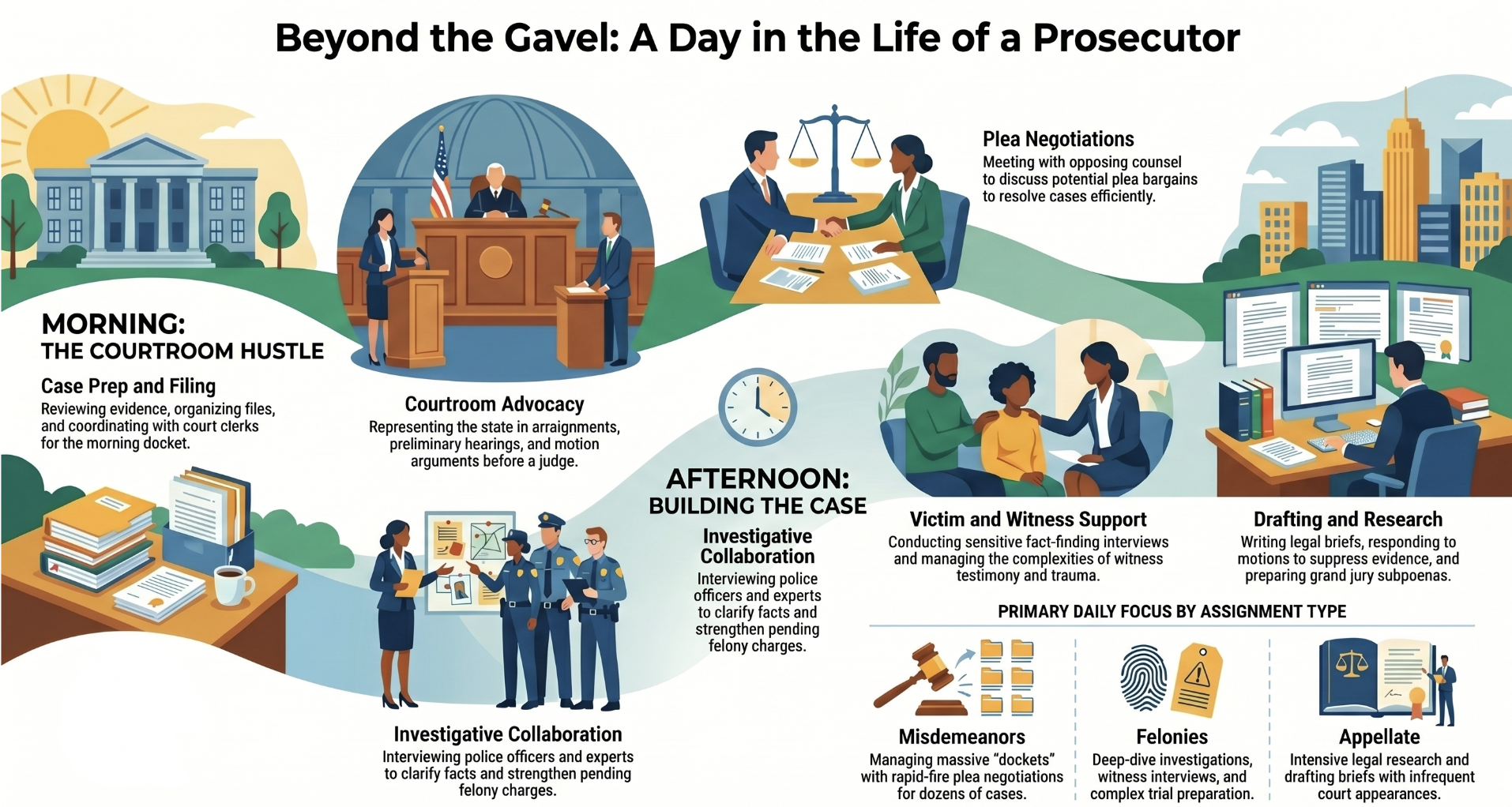
NEW YORK — In a bustling county courthouse, an assistant district attorney juggles three hearings before lunch: a bail review for a domestic violence suspect, a plea negotiation in a drug case and a quick motion hearing on evidence in an assault trial. By afternoon, the same prosecutor pores over police reports, interviews a victim and preps witness questions for a case headed to trial next week.
This is not an unusual day for thousands of criminal prosecutors across the United States. They represent the government in everything from misdemeanors to murders, wielding significant power to charge crimes, seek justice for victims and protect communities. Yet the role comes with heavy demands, from crushing caseloads to the emotional weight of confronting violence daily.
“Every day is filled with uncertainty, and every day poses its own unique, unexpected challenges,” one Manhattan prosecutor wrote in a career reflection. “In a typical day, I’ll see something hilarious and something heart-breaking, something rewarding and something frustrating, but never, ever boring.”
A path that demands dedication
Becoming a prosecutor starts with the same rigorous training required of any lawyer. Candidates need a bachelor’s degree, followed by a three-year Juris Doctor from an accredited law school. They must then pass the bar exam in their state and undergo a character-and-fitness review.
Many build experience through law school clinics, internships in district attorney offices or clerkships with judges. Entry-level jobs often go to recent graduates who show a passion for public service, trial work and community safety. Federal prosecutors, known as assistant U.S. attorneys, typically need several years of litigation experience first.
Hiring offices look beyond grades. They seek quick thinkers who handle pressure, communicate clearly with juries, police and victims, and demonstrate sound ethical judgment. “High moral character, sincere interest in public service … ability to handle pressure well,” according to one career guide for aspiring prosecutors.
Once hired, new prosecutors usually start with misdemeanors in busy local offices before moving up to felonies and specialized units such as homicide or sexual assault.
The realities of the daily grind
Most prosecutors spend hours each day in court handling arraignments, pleas, sentencings and trials. Back at the office, they review evidence, interview witnesses, draft motions and negotiate with defense attorneys. Caseloads can run into the dozens (or even hundreds) of active cases at once.
“The daily demands require high energy, an ability to think on one’s feet, and a talent for juggling multiple tasks,” the Harvard Law School prosecution guide notes. A single major trial can demand hundreds of hours of preparation, forcing prosecutors to reprioritize everything else.
Pay varies widely by location and experience. Entry-level assistant district attorneys often start between $58,000 and $125,000 a year, far below what many could earn in private practice. Federal roles and big-city offices tend to pay more, but the work is still government service, not big-law salaries.
The heavy emotional and practical burdens
The job’s biggest challenges go beyond long hours and tight deadlines. Prosecutors confront graphic evidence, victim stories and human suffering on a regular basis. Many describe secondary trauma, also called vicarious trauma or compassion fatigue, as an occupational hazard.
Lawyers as a group already face elevated rates of stress, depression and burnout. Prosecutors face an extra layer: repeated exposure to trauma narratives, high-stakes decisions that affect liberty and safety, and the pressure of limited resources. “Doing more with less is the classic scenario that inevitably leads to burnout, low job satisfaction, and attrition,” one study of large prosecutors’ offices concluded.
Some offices report staffing shortages and backlogs that add to the strain. Witnesses may be unreliable or intimidated. Political expectations from elected district attorneys and the public can intensify the pressure. And while most cases end in pleas, the rare trials demand intense focus under the public eye.
Yet many prosecutors say the rewards outweigh the costs. They gain early courtroom experience unmatched in private practice. They help victims find closure and contribute directly to community safety. “The real reward of this job … is in going to work each day knowing that what you are doing makes a real and positive difference in people’s lives,” one former prosecutor reflected.
A career that matters . . . if you can sustain it
As criminal justice debates continue nationwide, the men and women who decide whether to prosecute remain essential players. Their daily choices shape outcomes for defendants, victims and entire neighborhoods.
For those considering the path, insiders offer straightforward advice: Gain hands-on experience early through internships. Prepare for emotional demands as much as legal ones. And recognize that the role is not about glamour or money.
It is about service under pressure.
In the end, prosecutors occupy one of the justice system’s most demanding seats. They stand for the people in the courtroom, but the personal price is real: long days, tough calls and the quiet weight of carrying other people’s stories home.
Further reading
A Quick Guide to Local Prosecution (Harvard Law School)
Criminal Prosecutor Role and Responsibilities (Crowl & Crowl Law Firm)
“Crush of cases hobbling courts” (Inland News)
Life As a Prosecutor? (r/LawyerTalk via Reddit)
Resource Guide for Students Interested in Prosecution (PSJD)