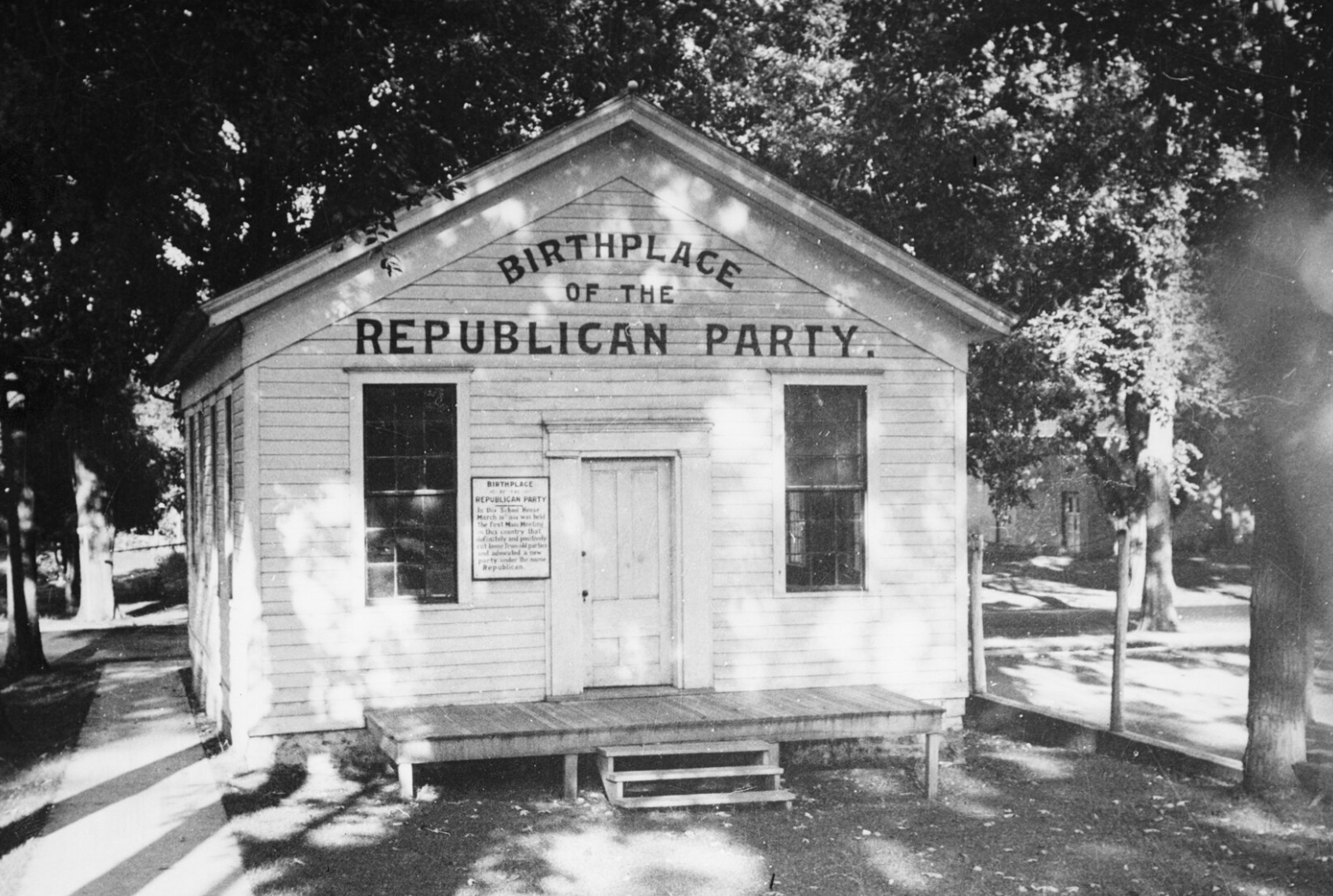
Birthplace of the Republican Party in the Little White Schoolhouse in Ripon, Wisconsin
WASHINGTON — In an era of high-stakes national politics, the Republican Party’s real engine hums at the neighborhood level, where unpaid volunteers known as precinct committeemen knock on doors, register voters and turn out the vote one household at a time.
The party’s structure is deliberately decentralized, mirroring the nation’s federal system. Authority flows upward from grassroots activists to county organizations, state parties and finally the Republican National Committee in Washington. That bottom-up design, party leaders say, keeps the GOP connected to everyday voters even as national figures set the broader agenda.
The national command: strategy and dollars from Washington
At the top sits the Republican National Committee, or RNC, the party’s national governing body.
It includes one national committeeman, one national committeewoman and the state party chairman from each of the 50 states, plus representatives from the District of Columbia and U.S. territories
Roughly 168 members in all.
They elect a chairman every few years.
Florida state Sen. Joe Gruters has held the post since August 2025.
The national chairman functions much like a chief executive.
Gruters and his staff coordinate multimillion-dollar fundraising, develop messaging, manage voter data and organize the quadrennial national convention that formally nominates the presidential ticket.
They provide training, advertising and strategic guidance to candidates up and down the ballot but rarely get involved in day-to-day local races.
State parties: turning national plans into local action
One level down, each state operates its own independent Republican Party, governed by its own bylaws and led by a state chairman elected by the state central committee.
These organizations recruit candidates for statewide offices, run voter-registration drives and distribute resources to county parties.
In California, for example, the state party works alongside county central committees to certify candidates and plan conventions, adapting national priorities to local realities.
The ground game: precinct committeemen deliver the votes
The real work, however, begins at the county and precinct levels — the foundation of what party insiders call the “ground game.”
Counties are led by elected county chairmen who oversee candidate recruitment for local offices, organize fundraisers and coordinate multiple precincts. But the backbone is the precinct committeeman (sometimes called a precinct captain or committee person). In most states, including California, these volunteers are elected every two years in the primary by Republican voters in their small geographic precinct — typically a neighborhood of a few hundred to a couple thousand people.
Their job description is straightforward but demanding: walk the precinct door-to-door, phone bank Republican-leaning households, deliver yard signs, help with absentee ballots and offer rides to the polls on Election Day.
Many keep detailed lists of supporters, host neighborhood meet-and-greets and relay local concerns upward to county and state leaders.
It is almost entirely volunteer work. No salary, flexible hours and often done alongside full-time jobs and family obligations.
“Power doesn’t trickle down from Washington,” one longtime county chairman in the Midwest explained in a recent party training session. “It starts with the precinct committeeman who knows which houses have the ‘R’ yard signs and who needs a reminder to vote.”
That grassroots focus is intentional.
Party rules emphasize that precinct committeemen elect county leaders, who in turn help choose state committee members and national representatives.
In practice, the national and state organizations supply the money, data and ads that local volunteers deploy in their neighborhoods.
It’s important to note that the system is not uniform.
Some states elect one committeeman and one committeewoman per precinct; others allow appointments to fill vacancies.
California’s large, diverse counties sometimes emphasize a “precinct strategy” that treats each neighborhood as its own mini-campaign.
Yet the core principle remains the same: the party’s strength depends on people willing to show up at the local level.
With midterm elections approaching, party officials say the structure is already in motion.
Precinct teams are updating voter lists, state organizations are training candidates and the RNC is refining its national playbook.
For Republicans hoping to influence the party — or simply understand how it wins — the message is clear: the most important seat at the table may be the one in your own precinct.
Further reading
How to Run a Lean, Effective Ground Game (Go Nominee)
Precinct captain (Wikipedia)
Republican unit roles and responsibilities (Republican Advocates)
Standing rules and bylaws of the California Republican Party
The rules of the Republican Party (adopted 2024)