Congress returns to work after quiet recess with partial homeland security shutdown still unresolved
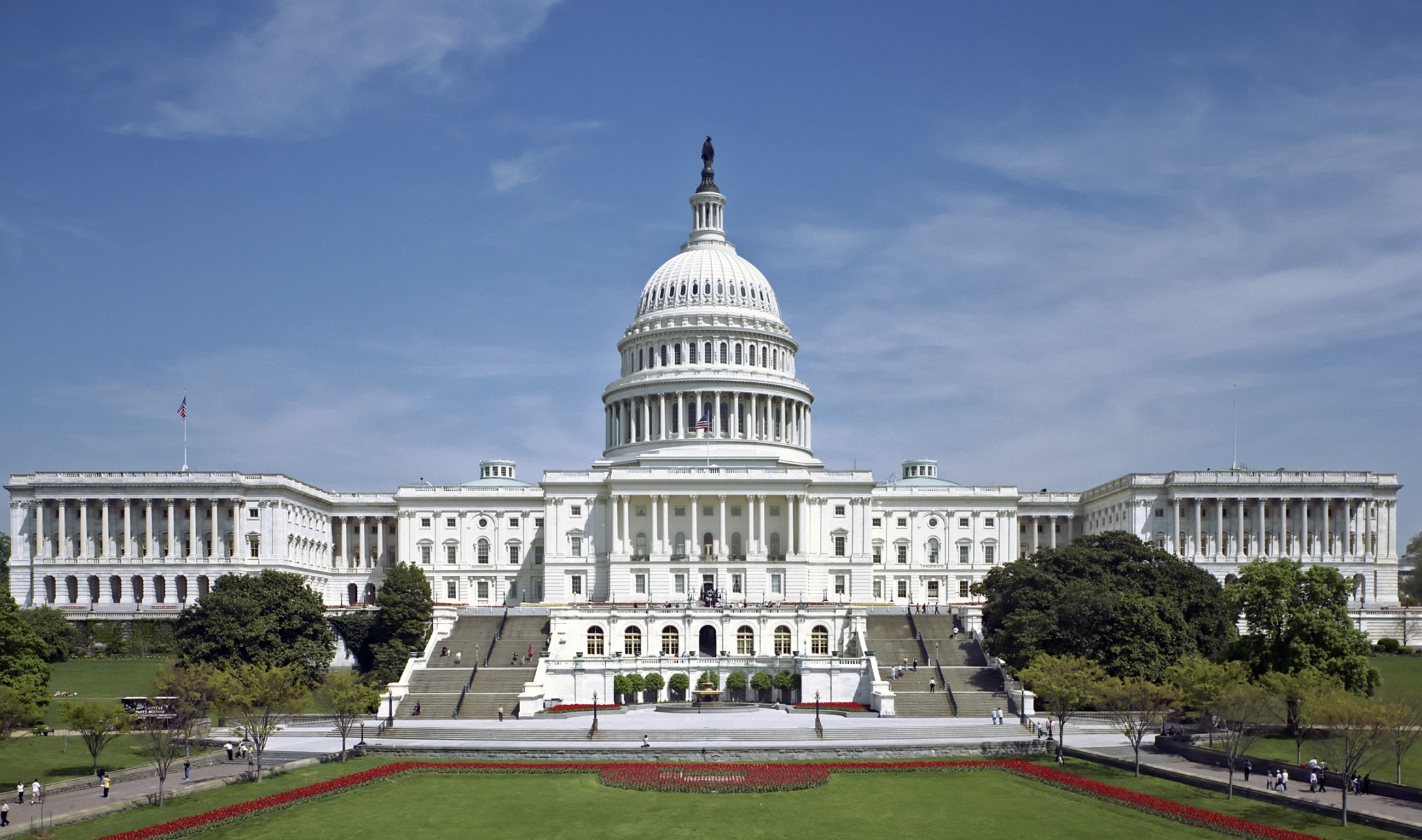
The U.S. Capitol Building
WASHINGTON — Congress returns from a two-week recess to a Capitol consumed by the politics of war, a brewing constitutional clash over a defiant former attorney general, and the opening salvos of a federal budget fight that will define the midterm election landscape.
Lawmakers in the House and Senate head back to Capitol Hill today after a spring recess that left both chambers largely idle, as a partial shutdown at the Department of Homeland Security enters its 59th day with no agreement in sight.
The shutdown, which began Feb. 14 when Congress failed to agree on new funding and immigration enforcement changes, is the longest partial government closure in U.S. history. It has disrupted operations at the Transportation Security Administration, the Federal Emergency Management Agency, the Coast Guard and other agencies while the rest of the federal government continues to function normally. Negotiations between the two parties have stalled, and neither chamber has scheduled a vote on a compromise bill.
The 119th Congress, now in its second session, wrapped up last week with almost no legislative action. The House met briefly on April 9 only to appoint a member to a defense strategy commission before adjourning until Monday at 2:30 p.m. The Senate held a short pro forma session the same day and adjourned until 3 p.m. Monday. No major bills were debated or voted on during the recess week.
Funding fights and shutdown politics
At the center of the week is the record‑long partial shutdown of DHS, which has strained key security operations and raised political stakes for both parties.
House Speaker Mike Johnson and Senate Majority Leader John Thune say they have agreed on a “path forward” to fully fund the department, but they have not yet locked down the votes or the details. Republicans are pushing to tie new money to tougher border enforcement and immigration restrictions, while Democrats want stronger oversight of enforcement and protections for certain immigrants.
With both parties wary of blame for prolonged disruptions at a national security agency, leadership is keeping the schedule fluid. A compromise framework could appear quickly and move on an accelerated timetable if leaders are confident it will pass.
On the House floor: quick‑moving bills
Even as DHS negotiations unfold behind closed doors, the House is filling its floor schedule with mid‑sized, mostly bipartisan bills designed to move quickly.
Many of the measures are slated for consideration under “suspension of the rules,” a fast‑track procedure that limits debate and amendments but requires a two‑thirds majority for passage. That approach allows leaders to showcase activity while contentious talks continue elsewhere.
Aviation and transportation issues dominate much of the week’s list. The House is expected to vote on bills targeting aviation supply‑chain security, easing certain airport regulations, modernizing supersonic aviation programs and improving technology at airport security checkpoints.
Members are also turning to technology and innovation, including legislation to reauthorize the National Quantum Initiative, support “smart space” activities and strengthen regional partnerships to manage ocean resources. Economic development appears in measures such as a “Made in America Jobs Act” and new broadband programs aimed at rural and Appalachian communities.
The schedule includes symbolic but high‑visibility items as well, including a resolution authorizing use of the Capitol grounds for the National Peace Officers’ Memorial Service.
In the Senate: floor time and flexibility
Across the Capitol, the Senate’s recent work has centered on appropriations, including a large consolidated spending bill meant to keep parts of the government funded in the current fiscal year.
Procedural votes in recent days have focused on moving that legislation and clearing pending nominations, reflecting leadership’s desire to reduce backlogs while larger funding fights play out. With DHS still in limbo, Senate floor time this week is expected to remain flexible.
Leaders are keeping room on the calendar for any DHS funding agreement that might emerge from House–Senate talks. In the meantime, they are likely to advance lower‑profile bipartisan bills that can be approved by wide margins with limited debate.
Committees take center stage
While floor maneuvering continues, much of the substantive work in Congress this week will happen in committee rooms.
Technology, social media and satellites
The Senate Commerce, Science and Transportation Committee is scheduled to consider a slate of bills that touch on technology, consumer protection and national security.
Among them is a proposal to require mental health warning labels on social media platforms used by minors, reflecting growing concern about the impact of online content on teenagers. Another measure would restrict satellite licenses for companies with ties to certain high‑risk foreign communications providers, part of a broader push to secure U.S. space infrastructure.
Lawmakers on the panel also plan to take up a bill reauthorizing the National Quantum Initiative and a requirement for detailed reports on the cybersecurity of commercial satellite systems.
Grid, AI and energy infrastructure
Energy and technology collide in the Senate Energy and Natural Resources Committee, where a subcommittee hearing will focus on the electric grid and the demands of high‑powered computing.
Senators are set to examine proposals to streamline the interconnection queue for new power projects, encourage the deployment of grid‑enhancing technologies and review how regulators account for new reliability risks. They will also hear about a government technology assessment of liquid cooling for artificial intelligence and high‑performance computing data centers, a sign of how deeply energy policy is now intertwined with advanced computing.
IRS, U.N. and gun rights
Other Senate panels are pursuing an unusually wide‑ranging agenda.
The Senate Finance Committee plans a hearing on the Internal Revenue Service’s 2026 filing season, including questions about backlogs, customer service and enforcement priorities following recent funding increases.
The Senate Foreign Relations Committee is expected to look at efforts to overhaul the United Nations, weighing how the United States can reshape UN bodies and budgets to better match its foreign policy goals.
Homeland Security and Governmental Affairs will focus on the Second Amendment, setting up a partisan clash over gun rights, gun violence and federal authority that is likely to echo beyond the hearing room.
Great Lakes, veterans and Congress’s own watchdogs
Environmental and veterans’ issues also get time on the schedule.
The Environment and Public Works Committee will review restoration efforts in the Great Lakes, connecting water quality and ecosystem recovery to regional jobs and infrastructure.
The Veterans’ Affairs Committee is examining programs for justice‑involved veterans, exploring how federal agencies can support former service members who are in, or at risk of entering, the criminal justice system.
Separately, a Legislative Branch appropriations panel will review the budgets of Congress’s own support agencies (which include the Congressional Budget Office, the Government Accountability Office and the Government Publishing Office), a reminder that lawmakers are also shaping the tools they use to analyze policy and oversee the executive branch.
War powers and Iran: a looming clash
Beyond budget and policy bills, a larger constitutional fight is building over war powers and U.S. actions toward Iran.
Democrats in both chambers are pressing for more public debate and formal votes on the scope of President Donald Trump’s authority to use military force in the region. House Democrats have already tried procedural moves to force a vote on a war powers resolution, underscoring concerns among both progressives and moderates about unchecked executive action.
In the Senate, Democrats are preparing a more organized push to restrict the president’s war powers, potentially through resolutions or amendments that would require congressional approval for major military escalations. Republican leaders have so far resisted broad, public hearings on the issue, preferring to handle sensitive discussions behind closed doors.
The dispute is fueling an institutional showdown that goes beyond Iran policy, reviving long‑running tensions over the balance of power between Congress and the White House on questions of war and peace.
Bondi defies subpoena, contempt threat looms
A parallel standoff is developing in the House Oversight Committee, where former Attorney General Pam Bondi will not appear for her scheduled April 14 deposition as part of the panel's investigation into the Justice Department's handling of the Jeffrey Epstein files.
The Justice Department informed the committee that Bondi was subpoenaed in her capacity as attorney general and, because she no longer holds that office, is no longer obligated to appear. Trump fired Bondi on April 2, reportedly over his dissatisfaction with how her department managed the release of the Epstein files.
The subpoena was bipartisan. Republican Rep. Nancy Mace (R-S.C.) introduced the motion, and every Democrat on the committee, along with four other Republicans, voted in favor. Mace has since pushed back on the Justice Department's legal argument, saying the subpoena was issued to Bondi by name, not by title.
The subpoena stemmed from the Epstein Files Transparency Act, a law passed by Congress in November and signed by Trump, which required the Justice Department to release all Epstein-related files by Dec. 19. The department missed the deadline, and has been accused of improperly redacting the names of high-profile individuals connected to Epstein while sometimes leaving identifying information about victims visible.
Rep. Robert Garcia (D-Calif.), the committee's ranking Democrat, threatened contempt charges if Bondi does not testify. "She must come in to testify immediately," Garcia said. "The survivors deserve justice."
The committee said it will contact Bondi's personal attorney to reschedule. Commerce Secretary Howard Lutnick has separately agreed to appear before the panel on May 6 to answer questions about his own ties to Epstein.
Outlook for the coming days
Congressional leaders have given no public timetable for resolving the Homeland Security funding crisis. If lawmakers fail to reach an agreement soon, pressure is likely to build from travelers, emergency responders and national security experts.
The return to Washington marks the end of a quiet recess period and the start of what is expected to be a more active stretch on Capitol Hill. Both chambers plan no floor activity this weekend, but the committee schedule suggests a return to the kind of oversight and legislative work that has been largely absent for the past several days.
This story is based on official congressional schedules and public records through April 12 and statements from congressional offices, federal agency communications, and public records.